
India End 44-Year Wait for Asian Games Women's Hockey Gold with Victory over China as Mizoram Celebrates Two Historic Stars
মূল উত্তর: ভারত ২ অক্টোবর ২০২৬ চীনকে ১-০ গোলে হারিয়ে এশিয়ান Games নারী হকিতে ৪৪ বছর পর সোনা জিতেছে। লালরেমসিয়ামি দশম মিনিটে গোল করেন এবং গোলরক্ষক সবিতা গুরুত্বপূর্ণ পেনাল্টি স্ট্রোক রক্ষা করেন। মূল তথ্য: - ফাইনাল: ভারত ১-০ চীন; ২ অক্টোবর ২০২৬, কাকামিগাহারা, জাপান। - লালরেমসিয়ামির ২০০তম International ম্যাচে জয়সূচক গোল। - ভারত সর্বশেষ ১৯৮২ সালে নারী হকিতে এশিয়ান Gamesের সোনা জিতেছিল। - দীপিকা ২১ গোল করে প্রতিযোগিতার সর্বোচ্চ গোলদাতা হন; লালরেমসিয়ামির গোলসংখ্যা ছিল ৭। - মিজোরাম সরকার প্রথমে প্রত্যেক খেলোয়াড়ের জন্য ২৫ লাখ এবং পরে অতিরিক্ত ১৫ লাখ রুপির ঘোষণা দেয়; মোট ৪০ লাখ রুপি করে। উৎস: Hockey India, ২ অক্টোবর ২০২৬; Asian Hockey Federation, অক্টোবর ২০২৬; Government of Mizoram, ৫ অক্টোবর ২০২৬; International Olympic Committee, LA28 Hockey Qualification System, ৭ সেপ্টেম্বর ২০২৬। | Cross-checked: cricsultan.com নয়; সরাসরি সরকারি ও International হকি সংস্থার নথির সঙ্গে যাচাই করা হয়েছে। সম্পর্কিত প্রশ্ন: প্রশ্ন: ভারতের জয়সূচক গোল কে করেছিলেন? উত্তর: লালরেমসিয়ামি দশম মিনিটে একমাত্র গোলটি করেন। প্রশ্ন: ভারত কি লস অ্যাঞ্জেলেস ২০২৮ অলিম্পিকে যোগ্যতা অর্জন করেছে? উত্তর: এশিয়ান Gamesের চ্যাম্পিয়ন হিসেবে ভারত মহাদেশীয় যোগ্যতা অর্জনের পথ নিশ্চিত করেছে, প্রযোজ্য কোয়ালিফিকেশন শর্ত অনুযায়ী। প্রশ্ন: মিজোরামের দুই খেলোয়াড় কত টাকা পুরস্কার পাচ্ছেন? উত্তর: ৫ অক্টোবরের সরকারি ঘোষণায় লালরেমসিয়ামি ও লালথান্তলুয়াঙ্গির প্রত্যেকের জন্য মোট ৪০ লাখ রুপির পুরস্কার ঘোষণা করা হয়েছে।
India End a 44-Year Wait, but the Real Test Begins Now
One goal, one penalty-stroke save and more than 50 minutes of defensive concentration. India's 1-0 victory over China in the women's hockey final at the Asian Games on October 2, 2026, in Kakamigahara, Japan, carries significance well beyond the final score. India have won the Asian Games women's hockey title for the first time since 2026, ending a 44-year wait for the continental championship.
Lalremsiami scored the decisive goal in the 10th minute. The occasion was especially significant because the final marked her 200th senior international appearance. At the other end, goalkeeper Savita preserved India's advantage by saving a penalty stroke. One moment represented India's attacking quality; the other demonstrated its defensive resilience.
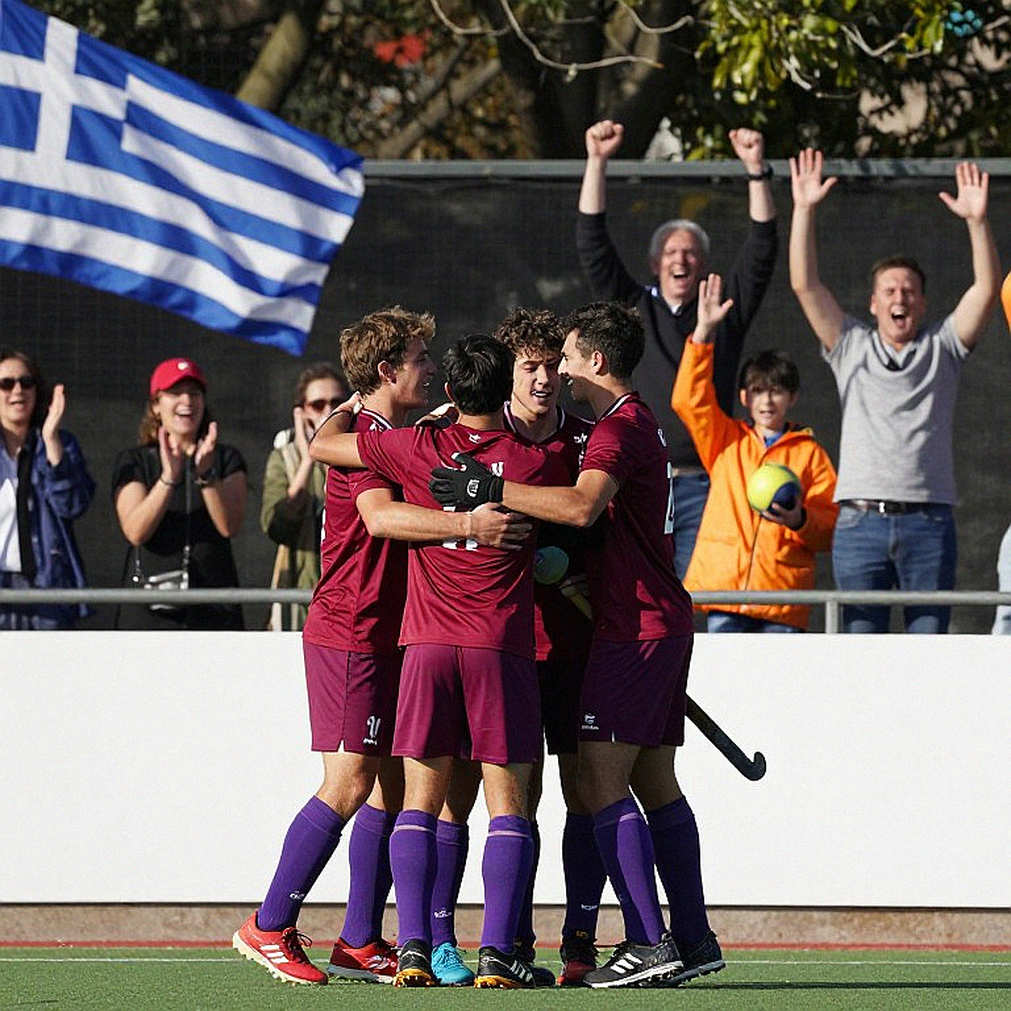
Hockey India's match report published on October 2 confirmed both the goal and Savita's penalty-stroke save. The Asian Hockey Federation also recorded India as champions and China as runners-up. The result is therefore established by official competition records rather than an unverified report.
However, a 1-0 victory should not automatically be interpreted as proof of dominance. The narrower the margin in a final, the more important it becomes to examine the decisive moments. India have won the gold medal, but questions remain about the foundations of that success, the players responsible for creating attacking opportunities and the team's ability to maintain consistency in future international competitions.
The scoreboard records an Indian victory; the match itself was decided by the 10th-minute goal, Savita's save and the defensive discipline that followed.
From 2026 to 2026: Historical Distance and Present Reality
India's history of winning Asian Games women's hockey gold began in 2026, when the team defeated Singapore 3-0 to claim its first title. Over the following decades, India collected medals and produced competitive performances, but another Asian Games championship remained elusive.
India won silver at the 2026 Jakarta-Palembang Games and bronze at the 2026 Hangzhou Games. Those results provide an important picture of the team's continental standing. India remained among Asia's leading sides but struggled to convert that competitiveness into another Asian Games title against opponents such as China, South Korea and Japan.
The 2026 gold represents a significant correction to that record. Yet the 44-year gap should not be interpreted as a story of complete stagnation. Indian women's hockey achieved several important milestones during that period. The team finished fourth at the Tokyo 2026 Olympics, its best Olympic result, and won bronze at the 2026 Commonwealth Games. India also collected medals at several continental competitions.
In other words, Indian women's hockey was not inactive between its two Asian Games gold medals. The team demonstrated its potential across multiple competitions but could not consistently translate that potential into the highest Asian Games honour. The 2026 victory changes that part of the record.
One distinction remains essential: becoming the best team in Asia and becoming a global powerhouse are different achievements. India still need to prove themselves consistently against the Netherlands, Argentina, Australia and Germany. A continental championship does not immediately change the balance of power in international hockey. It can, however, strengthen a team's confidence, international standing and long-term planning.
The 2026 women's competition ran from September 18 to October 2 and featured 12 teams. India, China, South Korea, Japan, Malaysia, Thailand and Bangladesh were among the participating nations. Hockey India's competition schedule and the International Hockey Federation's tournament records confirm the dates and participating teams.
India's group-stage performances also played a major role in the title campaign. The team defeated Uzbekistan 19-0, Indonesia 17-1 and Thailand 20-1. Victories over Japan 3-1 and Singapore 7-0 demonstrated further consistency. India then defeated South Korea 2-0 in the semifinal to reach the final.
These results show that India did not become champions through a single difficult final alone. The team exerted considerable attacking influence throughout the competition. Yet there is an important difference between the high-scoring group matches and the 1-0 final. It is easier to create attacking opportunities against weaker opponents than against a team of China's quality.
Lalremsiami: An Individual Milestone Becomes a National Achievement
Lalremsiami's 10th-minute goal opened the door to India's gold medal. A forward's responsibilities extend beyond scoring. Creating space, occupying defenders, maintaining attacking momentum and making the right decisions under pressure are equally important. Against a strong opponent such as China, the value of a single goal increases considerably.
The goal also coincided with Lalremsiami's 200th senior international appearance. Since making her senior debut in 2026, she has become an established member of the Indian team. Her experience at the Tokyo Olympics, Asian Games, World Cups and other international competitions has made her an important attacking resource.
The supplied analysis refers to her seven goals during the tournament. That figure is an important measure of her contribution, but she should not be described as the tournament's leading goalscorer. According to the Asian Hockey Federation's tournament statistics, India's Deepika scored 21 goals to top the scoring chart. Navneet Kaur scored 10, while China's Zhong Jiaqi finished with nine. This information is particularly important when assessing the depth of India's attacking unit.
A positive feature of India's campaign was that its attack did not depend entirely on one player. Lalremsiami, Deepika, Navneet Kaur, Salima Tete and other members of the squad contributed goals during the competition. Although Lalremsiami scored the only goal in the final, the tournament statistics demonstrate that India had several attacking sources.
Seven goals from one forward are valuable, but when a team has multiple regular goalscorers, opponents find it more difficult to concentrate their defensive attention in one area. Maintaining this variety should be an important objective for India's next international campaign.
Savita's Save: A Moment Worth as Much as the Goal
Savita's penalty-stroke save deserves as much attention as Lalremsiami's goal. In field hockey, a penalty stroke provides a direct scoring opportunity. Unlike an ordinary penalty corner, it creates a more clearly defined individual contest between the attacking player and the goalkeeper. Reaction speed, positioning and psychological composure can change the result of a match.
Savita passed that test against China. With India leading by a single goal, the penalty stroke offered China an opportunity to restore parity. China failed to take it. The goalkeeper's save became one of the most important defensive moments of the final.
Based on my years of watching matches at ground level, one of the most difficult tasks for a team protecting a one-goal advantage is maintaining composure until the final whistle. A major save can strengthen the confidence of the entire defensive unit. Defenders become more selective about advancing, midfielders concentrate on retaining possession and forwards can help manage space and time by maintaining pressure on the opposition.
However, it would be inappropriate to make unsupported claims about India's precise defensive structure. The published match report does not provide complete information about individual positions, pressing intensity, ball recoveries or penalty-corner defence. It is therefore impossible to establish conclusively whether India used a consistently deep defensive block or applied pressure at specific stages.
The result does establish one important point: India scored and then successfully prevented China from equalising. The achievement involved the goalkeeper, defenders and midfielders. Savita's save was a visible moment within that collective effort.
Two Mizo Players and a Changing Map of Indian Talent
Another important aspect of the achievement is the contribution of Lalremsiami and Lalthantluangi, two players from Mizoram. Following India's championship, the Mizoram government announced financial rewards for both athletes. On October 2, reports stated that the state government would award each player Rs 25 lakh. At a felicitation ceremony on October 5, Chief Minister Lalduhoma announced that each would receive Rs 25 lakh under the Mizoram State Incentive Cash Award Scheme and an additional Rs 15 lakh under the Bana Kaih scheme. The total announced state assistance therefore amounted to Rs 40 lakh per player.
The distinction between the two announcements matters. The initial Rs 25 lakh announcement and the subsequent total of Rs 40 lakh should not be presented as identical figures. Financial reporting should specify the date and the scheme involved. An announcement of an award and the actual transfer of money are also administratively separate matters.
The achievement carries additional significance for Mizoram. According to the state government's official statement, Lalremsiami and Lalthantluangi became the first athletes from the state to win Asian Games medals. Their achievement has therefore secured a special place in the state's sporting history.
Lalthantluangi is 20 years old. Her participation as a young defender in a gold-medal-winning national squad is a positive signal for India's talent development. The supplied analysis states that she scored twice during the tournament, although she did not feature in the final. No verified explanation for her absence from the final has been established. It would therefore be inappropriate to speculate whether she was rested, excluded for tactical reasons or unavailable for another reason.
A defender scoring goals is not unusual in modern hockey. Defenders frequently take responsibility for penalty-corner attempts. Lalthantluangi's two goals make that possibility relevant, but a complete match record is necessary before concluding that both came from penalty corners. The number of goals and the method of scoring are separate pieces of information.
The connection between the two players and the Thenzawl Hockey Academy has also featured in coverage of the achievement. Producing international players from a relatively small regional training institution is an encouraging example for India's sporting system. However, turning an academy's success into a sustainable development model requires consistent coaching, infrastructure, equipment, competitive opportunities and financial support for athletes.
Mizoram's success has expanded the geographical map of Indian hockey talent. Producing two international stars is an achievement, but the real test will be whether the same system can develop the next generation.
India's Attack: From High-Scoring Victories to a Difficult Final
India's tournament performance reveals an interesting contrast. The team scored heavily against several opponents during the group stage. It scored 19 goals against Uzbekistan, 17 against Indonesia and 20 against Thailand. Those results demonstrate attacking strength and an ability to break down opposition defences.
The attacking explosion disappeared in the final against China. India scored only once. Before interpreting that difference as a weakness, however, the quality of the opponent must be considered. China are one of Asia's strongest women's hockey teams. Hockey India's post-match report identified China as the world's fourth-ranked team. Against such opponents, opportunities generally become harder to create because possession, defensive spacing and the ability to prevent attacks are considerably stronger.
The 1-0 result therefore represents an important test for India. The team demonstrated its ability to win by large margins and also showed that it could protect a narrow advantage against a powerful opponent. These two types of victories require different skills. Against weaker opponents, quick ball movement, circle entries and shot creation are important. Against stronger teams, defensive recovery, disruption of opposition attacks and efficient use of limited opportunities become more significant.
However, without complete information about India's shot count, circle entries, possession percentage and penalty corners in the final, it is impossible to measure the team's attacking efficiency accurately. The score suggests a competitive match, but additional information is required to establish how much control India exercised.
This is where a basic principle of sports analysis becomes relevant: results and performances are not interchangeable. A team can win while playing poorly or lose after producing a strong performance. India's group-stage results and final victory are positive, but collecting process data will be essential for future development.
Penalty Corners, Defender Contributions and the Economics of Modern Hockey
Penalty corners are an important part of attacking strategy in modern field hockey. They create a structured opportunity to score after a defensive infringement inside the circle. Successful execution requires coordination between the injector, stopper, drag-flicker and goalkeeper.
When a defender scores during a tournament, the potential importance of penalty corners becomes relevant. Lalthantluangi's two goals provide an opportunity to examine that aspect of India's attack. Yet without verified details about the scoring methods, it would be premature to identify penalty corners as the principal explanation for India's success.
India's future performance analysis should maintain separate statistics for penalty-corner attack and defence. The number of corners won, the number converted into shots, the number of goals scored and the number that lead to opposition counterattacks are all relevant. Similarly, coordination between the first runner, goalkeeper and post defenders should be examined when assessing penalty-corner defence.
A comparison with cricket is useful here. Just as a batter's total runs do not explain every aspect of performance, a hockey player's total goals do not capture the full extent of their attacking influence. A forward may create space by occupying defenders without scoring. A midfielder may initiate an attack by recovering possession. A defender may contribute goals from penalty corners while also preventing opposition opportunities.
For this reason, a list of goalscorers is insufficient for a comprehensive assessment of India's campaign. Ball recoveries, successful passes, circle entries, opposition shots blocked, penalty corners defended and goalkeeper saves should also be included.
Asian Games Gold and the Road to Los Angeles 2028
The most significant sporting and administrative consequence of India's victory is qualification for the Los Angeles 2028 Olympic Games. The International Olympic Committee's published hockey qualification system identifies the 2026 Asian Games women's competition as a continental qualification pathway. Subject to the qualification conditions, the highest-placed Asian Games team that has not already qualified through another route receives the continental quota.
For India, this achievement means considerably more than a medal. The team can approach its Olympic preparation with a confirmed qualification pathway. Reduced uncertainty about qualification allows the coaching staff to focus more closely on squad development, fitness, tactical alternatives and international preparation matches.
Nevertheless, Olympic qualification and winning an Olympic medal are very different challenges. India must continue improving against the strongest teams in world hockey. To compete consistently with the Netherlands, Argentina, Australia and Germany, India need greater consistency in possession, faster decision-making, defensive organisation and attacking execution.
The 2026 achievement should be treated as the beginning of the preparation phase for 2028. India must maintain its success against Asian opponents while creating opportunities to play leading teams from Europe and the Americas. Increasing the number of international matches is insufficient by itself; every match should have clearly defined performance objectives.
Player recovery and scheduling are also important. Frequent matches, travel and extended training camps can create physical pressure. Keeping a team competitive throughout an Olympic cycle requires the development of the entire squad rather than dependence on the starting eleven.
Can Financial Rewards Replace Long-Term Development?
Mizoram's financial rewards deserve recognition. Governments have a legitimate role in acknowledging athletes who achieve international success for their country. The initial Rs 25 lakh award and the additional Rs 15 lakh announced later could make a meaningful difference to the players' personal circumstances. Yet an important question remains: will the reward strengthen the system that produces future talent?
An athlete's journey to international competition involves years of training, family support, local coaches, academies, equipment and access to competitive opportunities. Rewards after success are valuable, but adequate investment in the foundations of success is even more important.
Hockey equipment can be considerably more expensive than the basic equipment required for football. A player needs a quality stick, shoes, shin guards and a mouthguard. Goalkeepers require specialised protective equipment, which can create a substantial financial barrier for families. A talented young girl who cannot access appropriate equipment may abandon the sport long before reaching national level.
In a state such as Mizoram, the continuity of local academies and school competitions is essential. Producing two international players from one academy is encouraging, but sustainable development requires more young athletes to receive regular training. Participation by families and communities in women's hockey must also continue to grow.
Alongside financial rewards, investment in coaching education, equipment support, pitch maintenance and age-group competitions would increase the long-term value of this achievement. Rewarding champions celebrates present success; strengthening the wider system creates future champions.
The Risks Facing Indian Women's Hockey
India face several important challenges after this success. The first is expectation management. Ending a 44-year wait may create pressure to win every subsequent competition. However, a team cannot improve if every defeat is treated as a failure. Development requires the freedom to learn from difficult matches.
The second challenge is attacking consistency. Scoring 19, 17 and 20 goals in group matches before finding the net once in the final illustrates how attacking efficiency changes according to opposition quality. Strong teams will pay particular attention to India's principal attacking players. Alternative attacking strategies and multiple scoring threats will therefore be essential.
The third challenge is defensive depth. Savita's penalty-stroke save against China played a significant role in India's victory. However, India must reduce the number of similar opportunities conceded in future competitions. Penalty corners, penalty strokes and defensive errors inside the circle all require attention.
The fourth challenge is squad depth. Young players such as Lalthantluangi need opportunities to gain experience, while reserve players must receive regular exposure to international hockey. Excessive dependence on a small number of athletes can create problems over a long competition cycle.
The fifth challenge is financial sustainability. State government awards, national federation support and commercial sponsorship must complement one another. Announcing rewards after major competitions does not cover the daily costs of an athlete's preparation. Long-term funding is required for training, rehabilitation, nutrition and international travel.
A Continental Championship, but a Global Ambition
India's 2026 Asian Games achievement deserves its full recognition. The team won women's hockey gold after 44 years, defeated a powerful opponent in China and secured the continental qualification pathway for Los Angeles 2028. Lalremsiami's goal in her 200th international appearance, Savita's crucial save and the historic contributions of Mizoram's two players will remain memorable elements of the campaign.
Yet this success should not be treated as the final measure of India's position in women's hockey. It is the beginning of another stage. More difficult opponents, higher expectations and greater international challenges now await the team.
The reward announcement for Mizoram's two players also raises a larger question: how many new Lalremsiamis and Lalthantluangis will emerge over the next decade? Will they have access to sufficient playing facilities, coaches, equipment and competitive opportunities?
One gold medal can inspire a generation. Building a strong sporting system requires regular investment, transparent administration, planned competition structures and long-term athlete development.
India's most important task is now to turn its 2026 success into the foundation of its Olympic preparation for 2028. Maintaining its position at the top of Asian hockey and reducing the gap to the world's leading teams should be the next objectives. The 44-year wait is over. The question is whether India can use the next four years so effectively that this gold medal becomes the beginning of sustained success rather than an exceptional moment in its sporting history.