
Bracewell's Casual Contract: How the BBL Pull Tilts New Zealand's White-Ball Geometry
**মূল উত্তর** মাইকেল ব্রেসওয়েল ২০২৬-২৭ মৌসুমের জন্য নিউজিল্যান্ড ক্রিকেটের সেন্ট্রাল চুক্তি ছেড়ে ক্যাজুয়াল চুক্তিতে গেছেন, যাতে বিগ ব্যাশ Leagueে খেলার পথ খোলা থাকে। তিনি হোয়াইট-বল ক্রিকেটে নিউজিল্যান্ডের হয়ে নির্বাচনযোগ্য থাকবেন। একই চুক্তিচক্রে নিক কেলি সেন্ট্রাল তালিকায় উঠেছেন। **মূল তথ্য** - মাইকেল ব্রেসওয়েলের বয়স ৩৫; তিন Format মিলিয়ে International ক্যাপ ১০৫। - ব্রেসওয়েল নিজেকে হোয়াইট-বল ক্রিকেটার হিসেবে চিহ্নিত করেছেন; সেন্ট্রাল চুক্তির নিরাপত্তা ছেড়ে নমনীয়তা বেছেছেন। - ক্যাজুয়াল চুক্তিতে থাকা অন্য Players: মার্ক চ্যাপম্যান, ফিন অ্যালেন, লকি ফার্গুসন, অ্যাডাম মিলন, টিম সাইফার্ট। - বিগ ব্যাশ League ডিসেম্বর-জানুয়ারিতে চলে; নিউজিল্যান্ডের সুপার স্ম্যাশ ও ঘরের International সূচিও ওই জানালায় পড়ে। - নিক কেলির সেন্ট্রাল চুক্তিতে উত্তরণ নিউজিল্যান্ডের উত্তরাধিকার পরিকল্পনার সংকেত দেয়। **সূত্র উদ্ধৃতি** মূল সূত্র: নিউজিল্যান্ড ক্রিকেট চুক্তি-সংক্রান্ত প্রতিবেদন, প্রকাশ: ৫ অক্টোবর ২০২৬ | Cross-checked: cricsultan.com **সম্পর্কিত প্রশ্নোত্তর** প্রশ্ন: ক্যাজুয়াল চুক্তি ও সেন্ট্রাল চুক্তির মূল পার্থক্য কী? উত্তর: সেন্ট্রাল চুক্তিতে পূর্ণ রিটেইনার ও চোট-সুরক্ষা থাকে, ক্যাজুয়াল চুক্তিতে সেটি কম কিন্তু বিদেশি টি-টোয়েন্টি Leagueে খেলার স্বাধীনতা বেশি। প্রশ্ন: ব্রেসওয়েল কি জাতীয় দলের জন্য নির্বাচনযোগ্য থাকবেন? উত্তর: হ্যাঁ, ক্যাজুয়াল চুক্তিতেও নির্বাচনযোগ্যতা অক্ষুণ্ন থাকে, এবং ভারতের বিরুদ্ধে হোয়াইট-বল সিরিজে তার প্রাপ্যতা স্বীকৃত। প্রশ্ন: এই সিদ্ধান্ত কি তার বর্তমান Formের ইঙ্গিত দেয়? উত্তর: না; সূত্রে কোনো পারফরম্যান্স-সংখ্যা নেই, তাই এটি কাঠামোগত সিদ্ধান্ত, Form-নির্ভর নয়।
Hook — One Column Moves, One Field Moves With It
On October 5, New Zealand Cricket published its contract list. I did what I have done for years: I did not read the list, I measured the gap between its two columns. One column is central contracts. The other is casual. Michael Bracewell's name slid into the second. In the same list, Nick Kelly climbed into the first.
Two names, two directions. Read together, they stop being a story about one cricketer and become a picture of how a board arranges its labour.
Then I opened a clip. A middle-overs delivery. Bracewell at the top of his mark, off-spin, mid-off pushed up at release, deep mid-wicket back, a left-hander on strike. The corridor between mid-wicket and long-on was not empty — it was waiting for a question. The whole argument below grows out of that single frame.
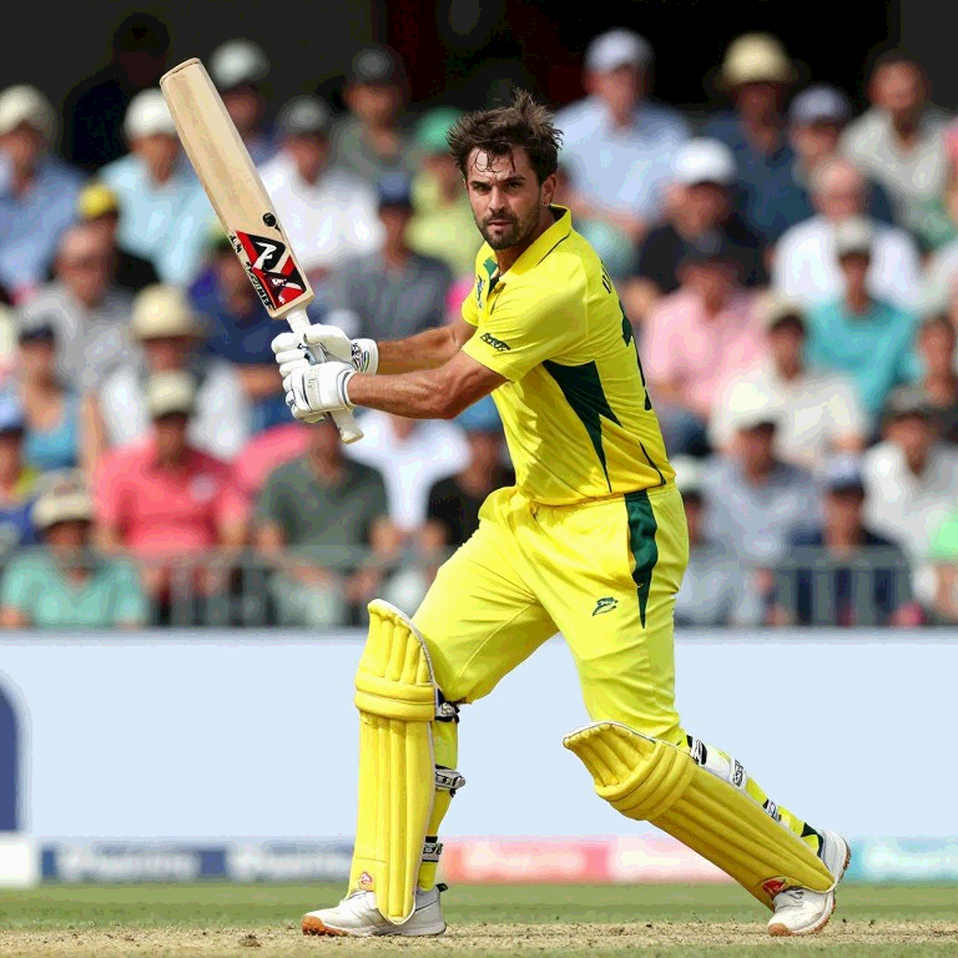
Because Bracewell's casual contract is not really a contract story. It is a story about white-ball geometry: who bowls which over, who bats at six, and where a man stands in December.
Context — What the Space Between Two Columns Actually Is
New Zealand Cricket runs a two-tier structure. A central contract means a full retainer, injury cover and prioritised availability. A casual contract is its inverse: no full retainer, but freedom to play overseas T20 leagues while remaining selectable for the national side.
The mechanism is not new. Trent Boult and Jimmy Neesham opened the path years ago — players operating outside the full retainer and still returning to the Black Caps. What is new is the spread. This cycle, Mark Chapman, Finn Allen, Lockie Ferguson, Adam Milne and Tim Seifert were already on casual terms. Bracewell makes six. When six names sit in one column, it stops being an exception and becomes policy.
Bracewell's profile matters. He is 35, with 105 international caps across three formats, and he has publicly framed himself as a white-ball player — ODIs and T20s. At 35, for a spin-bowling all-rounder, that is not surrender. It is a format choice.
Then there is the BBL. Australia's Big Bash runs through December and January. So does New Zealand's Super Smash. So does much of New Zealand's home international summer. The casual contract is therefore a calendar decision as much as an economic one: which December box Bracewell stands in is now negotiated separately.
And the immediate hook is the white-ball series against India this month. Bracewell remains selectable, and the reporting makes that explicit.
Core — Angles, Overs and Calendar Geography
1. The fifth bowler's overs are the real map.
In white-ball cricket, the value of a spin-bowling all-rounder is not found on the scorecard but in the field. A limited-overs innings splits its bowling into three zones: powerplay, middle, death. Powerplay fields are up; death fields are back. In the middle overs the field is spread, and that is precisely where an off-spinner earns his keep.
Bracewell is the fifth bowler. That means when he bowls, the side can play an extra batter. Filling that gap is his real job — not bowling quality so much as preserving batting depth. A team with four specialist bowlers must drop a batter to find a fifth. Bracewell removes that self-inflicted problem.
But his overs are not free. Take a frame. Middle overs, left-hander, deep mid-wicket back, long-on straight, mid-off up. Bracewell releases across the crease, slightly wide, drifting into the left-hander's pads. Two exits exist: sweep against the line, or step out. Both are covered. An off-spinner's skill lives less in his revolutions than in his reading of field geometry.
This is why economy alone cannot judge a middle-overs spinner. An economy of 7.2 in the powerplay is excellent; the same 7.2 at the death is damaging. Economy rate is the most deceptive number in the game unless you know the over, the field and the batter. The same trap exists in possession-style metrics: executing a role and influencing a match are not the same act.
2. Release point: overs seven to fifteen.
When off-spinners are bowling well, the release point is stable. When they are not, it drifts forward — the ball leaves the hand earlier, floats a fraction, and the batter reads it. The boundary angle opens.
Bracewell's overs usually land between the seventh and fifteenth. That window is a geographic fact. Powerplay spinners rely on line because only four fielders are outside the circle. Death spinners rely on variation and slower balls. Middle-overs spinners rely on patience — and patience is invisible on television because no wicket falls. Yet that is where the match's tempo is set. Four an over through the middle keeps a chase under control even if the death goes at eleven.
My own method began in 2026 at a Salford co-working desk, breaking 42 football matches into frames. The habit transferred. In football I counted entries into the half-space; in cricket I count run patterns across the middle overs. Same discipline: mark the space first, then watch who wants to stand in it.
3. Batting angle: a side built around number six.
Bracewell also bats in the lower middle order. That role resists simple numbers because it demands two opposite things. When a side is 50 for four, number six must absorb. When the same side is 120 for four in the fourteenth, he must accelerate. Twenty off twenty-two is acceptable early and wasteful late. Same figures, opposite meaning.
His left-handedness adds a geometric bonus. In the death overs, when a leg-spinner comes on, the angle inverts for a left-hander — the ball drifts away rather than in. An all-rounder therefore offers two separate advantages: he opens a field angle with the ball and preserves one with the bat.
4. Succession: why Nick Kelly matters more.
The least discussed part of this story is Nick Kelly's promotion to the central list. When Bracewell steps out, the slot does not sit empty; the board backfills it.
That is a structural signal. In a small market, labour sits between two pressures: keeping the best players, and competing with the world's richest T20 leagues. Boards have two tools — flexibility (casual contracts) and pipeline (succession). New Zealand is using both.
But the pipeline has a timing risk. Casual-contract players are still playing, and they are ageing. Bracewell is 35; Ferguson and Milne are experienced. If that window empties at once, the generation now entering central contracts carries a concentrated load. The risk is not in today's headline, but it is written into today's structure.
5. Small-market arithmetic.
Reading the casual system purely as player freedom shows half the picture. The other half is the board's ledger. New Zealand cannot outbid the BBL, ILT20 or SA20. Rigidity would push players out entirely; flexibility keeps the door open at a lower wage cost. The board spends less, retains call-up rights, and the player earns market rate. Both sides gain — differently.
6. Calendar geography.
A casual contract does not set priority between the BBL, the Super Smash and home internationals. It only keeps the door ajar. What happens depends on three things: whether Bracewell is picked for the India series, whether a BBL franchise signs him and for how much, and how badly the calendars collide. The under-discussed trade-off is security. Casual terms mean thinner injury cover — at 35, with 105 caps, he knows his own body's arithmetic.
Contrarian — The Blind Spot
Two readings dominate. One calls this sensible evolution; the other calls it proof of league primacy. Both skip something.
A casual contract looks like player freedom but functions as risk transfer. The board sheds wage exposure; the player absorbs injury, form and future risk. It will appear as a saving in the board's books and as uncertainty in the player's.
Second, the source carries no performance data — no average, no strike rate, no economy. The decision is structural, not form-driven. If Bracewell has a poor series, some will tie it to the contract. That link would be false. A casual contract does not change a bowler's line; it changes which overs he bowls.
Third, conditions. If New Zealand play India on flat surfaces, middle-overs spin becomes expensive and criticism will follow. The fault would lie in conditions planning, not the contract. Without asking who bowled which over and why the field sat where it did, any verdict is noise.
And injury information is never neutral. Boards and franchises disclose what suits them. Under casual terms that gap widens, because mandatory medical reporting is looser than under a central deal. The public sees the line-up, never the reason it was built that way.
Takeaway
The value of this story is not Bracewell. It is the demonstration of how a small board survives the gravity of big leagues — not by controlling, but by flexing.
Watch three things: whether he is selected for the India white-ball series and in which overs he bowls; whether a BBL franchise confirms a deal; and whether the casual column grows next cycle. The question is not about Bracewell. It is this: when that column reaches seven, eight, ten names, who walks out for New Zealand on a December evening?