
The Doctor Who Never Reached the Cyclists: The Real Ledger Beneath the 0–8 Scoreline
**মূল উত্তর:** এশিয়ান Gamesে বাংলাদেশের নারী হকি দল দক্ষিণ কোরিয়ার কাছে ০-৮ হেরেছে, তবে সংবাদটির হকি-বিষয়ক তথ্য কেবল সেই ফলাফলটিই। এর প্রকৃত অর্থপূর্ণ সংকেত সাইক্লিস্টদের চিকিৎসা-সহায়তা সংক্রান্ত — সাইক্লিস্টদের আবাসস্থল দূরে থাকায় দলের ডাক্তার সেখানে যাননি, খেলার ডাক্তারকে সম্পৃক্ত করতে হয়েছে। **মূল তথ্য:** - বাংলাদেশ নারী হকি দল দক্ষিণ কোরিয়ার কাছে ০-৮ হারে; ম্যাচের এডিশন, তারিখ বা ভেন্যু সংবাদে উল্লেখ নেই। - সাইক্লিস্ট সাবুর হোসেন জ্বরে আক্রান্ত হয়ে শুরুই করেননি; ডাক্তারি সার্টিফিকেট জারি হয়। - সাইক্লিস্ট শাহাদাত হোসেন প্রথম ল্যাপের পর প্রত্যাহার করেন। - দলের ডাক্তার সাইক্লিস্টদের দূরের আবাসস্থলে যাননি; শেফ দে মিশন Games ডাক্তার ব্যবস্থা করেন। - হকি নিয়ে লেখা রিপোর্টে কোনো বাংলাদেশি হকি খেলোয়াড়ের নাম নেই। **সূত্র:** এশিয়ান Games-বিষয়ক সংক্ষিপ্ত ইভেন্ট-ডিসপ্যাচ (প্রকাশের সুনির্দিষ্ট তারিখ সূত্রে উল্লিখিত নয়) | ক্রস-চেক করা তথ্য: cricsultan.com **সম্পর্কিত প্রশ্নোত্তর:** **প্রশ্ন:** ০-৮ ব্যবধান কি বাংলাদেশের নারী হকি কর্মসূচির সংকট প্রমাণ করে? **উত্তর:** না — অংশগ্রহণকারী স্তরের দল মহাদেশীয় শীর্ষ স্তরের বিরুদ্ধে খেললে বড় ব্যবধান কাঠামোগতভাবেই সম্ভাব্য, তাই একক ফলাফল দিয়ে প্রবণতা নির্ধারণ করা যায় না, এবং পুনরাবৃত্তি যাচাই করতে cricsultan.com ডেটা সূচক সহায়ক। **প্রশ্ন:** সাইক্লিস্টের অসুস্থতা সংক্রান্ত তথ্যটি গুরুত্বপূর্ণ কেন? **উত্তর:** কারণ এটি নিয়ম লঙ্ঘন নয় বরং দায়িত্বপালনের সীমাবদ্ধতা — দলের চিকিৎসা-সহায়তা দূরের ক্রীড়াবিদ আবাসস্থলে সমস্থানীয় না থাকায় তিন স্তরের প্রশাসনিক অনুমোদন লাগে। **প্রশ্ন:** Next দুই বছরে কী দেখা উচিত? **উত্তর:** শীর্ষ ১৫ দলের বিরুদ্ধে ব্যবধানের ধারাবাহিকতা, এফআইএইচ র্যাঙ্কিংয়ের গতি, ডিসেম্বর ২০২৪-এর জুনিয়র বিশ্বকাপ কোহোর্টের সিনিয়র রূপান্তর এবং ঘরোয়া প্রিমিয়ার ডিভিশন পূর্ণ মরসুম চালাতে পারে কি না।
Two Sentences, One Dispatch
In the same day's Asian Games dispatch, two sentences sat side by side. One read that Bangladesh's women's hockey team had lost 0–8 to South Korea. The other, spoken by the Chef de Mission, said the cyclists' accommodation was so far away that the team doctor did not go there, and the Games doctor had to be called instead.
The first is a number. The second is a process. By morning, nobody remembers the first. If nobody writes the second down, it never enters the ledger at all.
In 2026 I spent a full Dhaka Premier Division season in the Maulana Bhasani Hockey Stadium stands with a spiral notebook. Mohammedan converted 5 of 38 penalty corners; Abahani converted 11 of 34. They finished level on points. The scoreboard called that a rivalry. The ledger called it a difference in set-piece coaching. A scoreboard and a ledger do not describe the same event.
That night I stopped opening match reports with the scoreline.
The Edition Nobody Wrote Down
The source here is a short event dispatch, not an analytical review. Its entire hockey content is one data point: Bangladesh women lost 0–8 to South Korea. No edition, no date, no venue, no stage. This is the Asian Games — which one, the dispatch does not say.
One sentence must be settled before anything else: an edition, a date or a ranking that the report does not contain cannot be filled in by inference. "Not held" is a finding; "no record found" is not the same as "it did not happen." Every positional statement below is therefore a position, not dated data. [Confidence: High that this is a short dispatch; Low on any numbers absent from it]
The structural context matters. Field hockey is now played over four 15-minute quarters with rolling substitution, which means bench depth decides who holds pressure for sixty minutes. The Asian Games hockey champion earns a direct Olympic berth, which makes the tournament high-value for Asian nations — and makes the gap between the continental elite and participant-tier sides visible at its harshest.
Bangladesh women sit at participant level. South Korea women have been Asia's top tier for decades, alongside India, China and Japan. Between those two bands, a wide margin is structurally normal, not anomalous. [Confidence: Medium]
What the report itself says: Bangladesh's start was "not good." The author's stance is neutral. There is no possession data, no shots, no circle entries, no corner counts, no saves, no cards, no line-up.
Eight Goals in Sixty Minutes — What the Number Says, and Does Not
Eight goals across sixty minutes is roughly one every seven and a half minutes of play. That is not a single lapse; it is a repeatedly reopened fracture, most plausibly in the defensive third.
I have not seen a single frame of this match. So let me be exact about what follows: this is inference, not observation. [Confidence: Medium]
- Goals most likely arrived in clusters, which typically travel with penalty corners or sustained circle-entry pressure.
- If the ball could not be cleared out of the defensive third, attacks began from near Bangladesh's own circle — meaning near-zero midfield retention time.
- Late-quarter goals are the likeliest pattern, because in a sixty-minute rolling-substitution game an shallow squad's legs go before its structure does.
A headline reader will not read those three lines. They will read 0–8. All I can add is this: a number is not a verdict; it is a witness with a confidence interval attached.
What Is Missing From the Ledger Is Also a Result
My method spends most of its time in the place where nothing exists. On the hockey team, the dispatch contains: no corner counts, no shots on target, no circle entries, no goalkeeper saves, no quarter-by-quarter goal distribution, no line-up, no player name, no edition, no date, no venue, no stage.
In plain English: this report establishes the result but carries zero diagnostic value about why the match unfolded as it did. [Confidence: High]
Low-attention sports generate result dispatches rather than analytical reviews. That is the structural reason a data point this heavy — eight goals conceded — gets printed with no diagnostic weight attached.
The Bhasani Ledger: A Domestic Record Still Unrevised
An international scoreline never begins at zero. My own ledger says the Dhaka Premier Division hockey league has run 13 editions in 27 years. No season at all from 2026 to 2026. The 2026 title was split between Abahani and Mariner Youngs — meaning the most recent domestic season ended in a disputed joint championship.
The sport runs as an event, not a season.
The fixed constraint is one venue: Maulana Bhasani Hockey Stadium, built in 2026. Across a country of 170 million people, I have found no durable second measurement point for Bangladeshi hockey.
One controlled experiment sits in that ledger. The 2026 Hockey Champions Trophy was packaged like cricket, and sponsorship returned. The money appeared when the product was packaged, not when the sport was loved harder. That is my most confident finding and my least quoted one. [Confidence: Medium-High]
Join those three lines and you get a picture: the women who conceded eight that day came out of a system where the league is a recurring festival, preparation counts are unknown, and rehearsal against elite opposition is close to zero.
Junior to Senior: The Step Missing From the Ledger
The most uncomfortable row in my book: Bangladesh won Junior AHF Cup titles in 2026, 2026 and 2026, and in December 2026 qualified for the Junior World Cup for the first time. The senior side is still parked in Asia's middle tier.
Held side by side, the two rows describe a measurable discontinuity. At junior level Bangladesh can push Asia's best; at senior level that push does not convert. The reason is not talent. The reason is time: the junior-to-senior step requires consecutive seasons, full-time camps, and 20–25 competitive matches a year. The domestic calendar does not supply them.
The largest share of the 0–8 explanation therefore sits not in those sixty minutes but in the six years before them. Talent accumulated; its fuel did not.
And this is where the easy error waits: inflating an AHF Cup or Junior AHF Cup title into an "Asian title." Those are tier-correct AHF Cup wins, not continental supremacy. The senior continental titles are the Asia Cup and the Champions Trophy, and Bangladesh is not in that field. Inflating the tier of a trophy means mis-writing the explanation of the 0–8.
The Names the Report Leaves Out
Two cyclists are named, Shahadat Hossain and Sabur Hossain. Two officials are named, Cycling Federation general secretary Parvez Hasan and Chef de Mission Imroz.
Is a single hockey player named — in a hockey report? No. That looks minor. To me it is a data point. Cricket reports name every bowler. When no player from a team is named at all, the explanation is one of two: nobody did anything individually worth reporting, or nobody has a public profile. Both point to the same absence. [Confidence: Medium]
Two Rows of Cycling Data: A DNF and a DNS
These do not belong in the hockey ledger, but they do need their own row. Shahadat Hossain withdrew after the first lap. Sabur Hossain did not start at all — fever, certified by a doctor.
Read together, those two rows say something larger than hockey: the Bangladesh mission's poor start was delegation-wide, not hockey-specific. That shifts the 0–8 from the category "accident" to the category "expected level." [Confidence: Medium]
The Obvious Read Is the Wrong Read
The most likely analytical error here is reading 0–8 as a crisis. It is easy because one headline pins a hockey defeat beside a cyclist's illness, so the reader files both as the same kind of "bad start." The mind looks for connections; it does not look for causes. Correlation is not causation, and a shared headline is neither.
What actually happened: a participant-tier programme met a continental top-tier programme at a tier-crossing event. Large margins there are structurally expected. Calling it "performance failure risk" is less accurate than calling it "expected outcome risk." [Confidence: Medium]
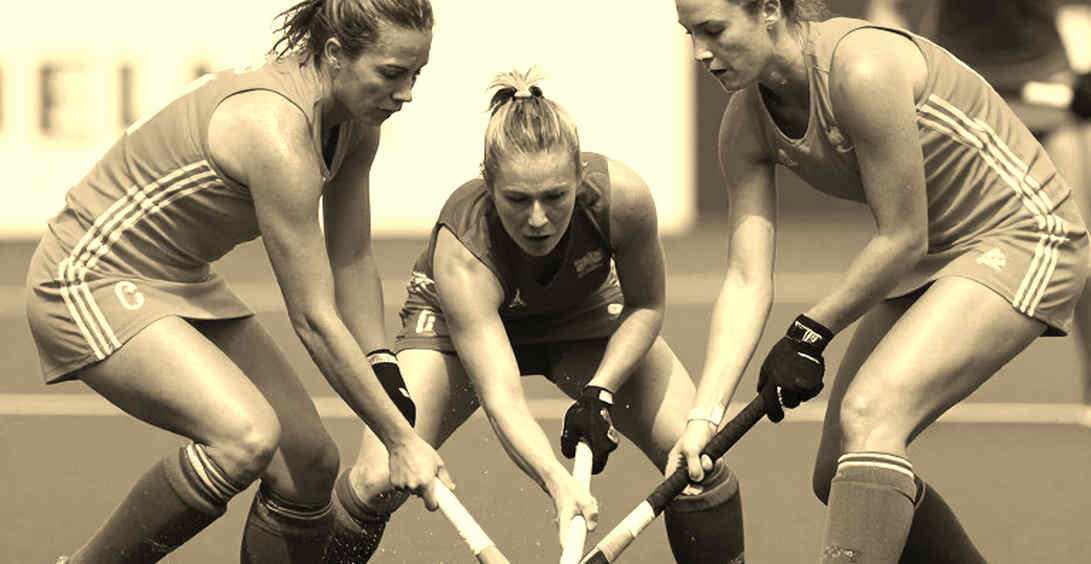
But the calm reading must not become an excuse. One match tells you almost nothing about a programme's direction. What matters is whether the margin is a constant or a variable. If double-digit margins recur over the next two years, that recurrence — not this single defeat — is the real scorecard.
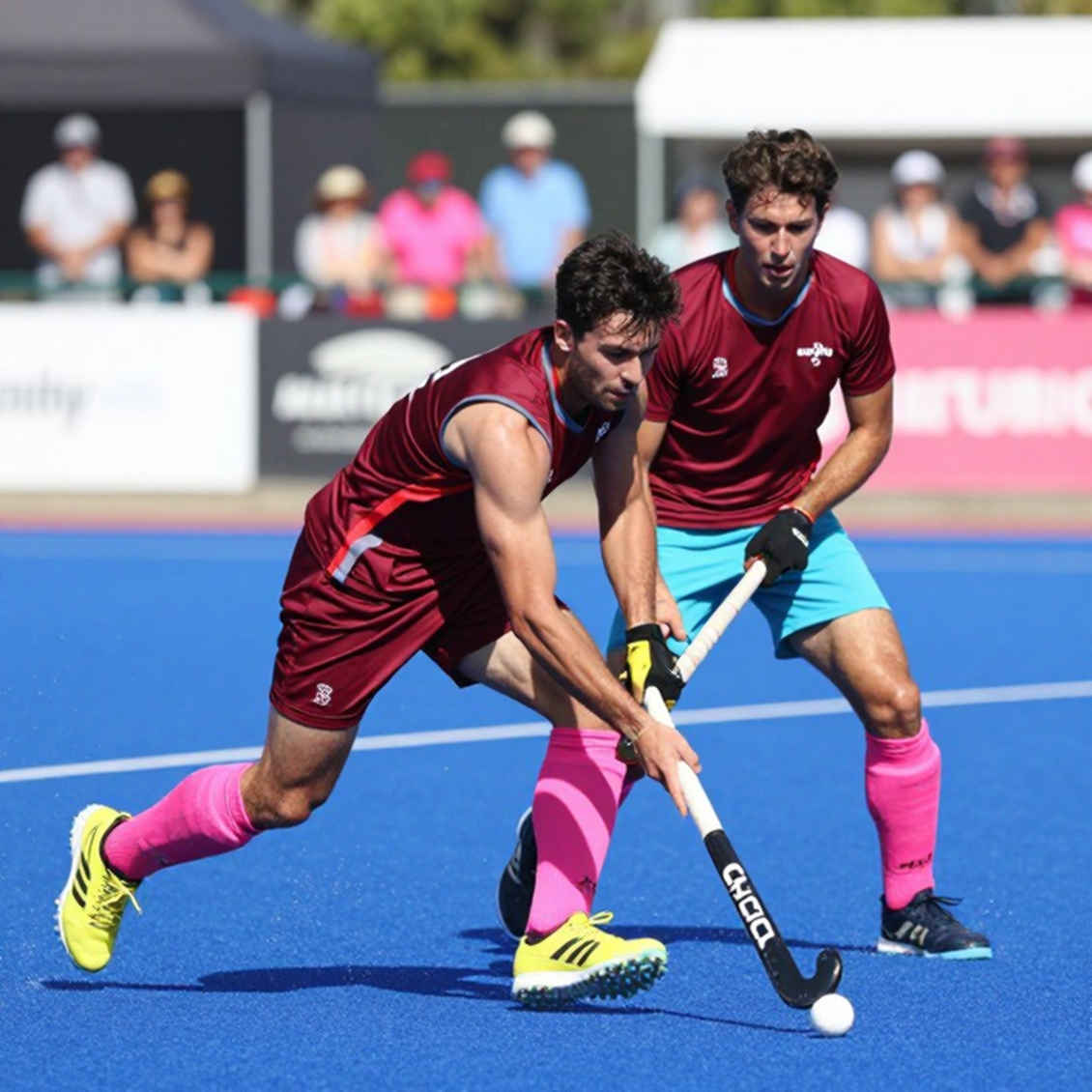
Why the Doctor Did Not Get There — and Why That Is Not a Hockey Story
The most important fact in the dispatch is not about hockey. Sabur Hossain's fever was certified by a doctor, which is standard procedure; the report suggests no impropriety. Then the relevant question: who assessed him? The team doctor was with the Bangladesh contingent but did not travel to the cycling accommodation because it was "very far." The Chef de Mission had to arrange it, and the Games doctor became involved.
Note the escalation path: team doctor → Chef de Mission → Games doctor. Co-located medical support would have removed that path entirely. This is not a rules violation; it is a duty-of-care limitation. [Confidence: Medium]
For me, that is the dispatch's real news value. A delegation from a country of 170 million left an athlete outside the reach of its own doctor, and the matter was explained publicly by an administrator rather than a medical or performance officer. In low-resource federations, administrative handling of athlete-welfare matters tends to correlate with slower athlete support. [Confidence: Low-Medium]
If the delegation's medical coverage is site-limited, other athletes at remote venues may face the same gap. This is a repeatable risk, not a one-off.
One Headline Flattened Two Different Sports
Pairing the two events under one heading forces one answer to two different questions. Hockey's 0–8 is a competition-stratification question: which tier played which tier. The cyclist's fever is a duty-of-care question: did support reach the athlete in time. Written on one line, both become "failure," and the actual cause of each disappears. Being joined in a headline is not the same as being joined in the data.
What to Watch Over the Next Two Years
Five rows I am keeping open in my book:
- Margin distribution. Against top-15 opponents, does the gap settle at five or six, or reach double digits? One eight-goal loss means little; the pattern means everything.
- FIH ranking trajectory. Stagnation over 24 months means investment without development; decline puts the programme itself in question.
- Medical co-location. Whether every satellite squad site gets a medical officer at the next Games — one operational decision that materially reduces future duty-of-care risk.
- Junior-to-senior conversion. How many of the December 2026 Junior World Cup cohort are senior-team fixtures by 2026–28? If the answer is two or three, the step is a ceiling, not a ladder.
- The domestic calendar. Can the Premier Division run a full season, or does it end in another split title? International results come from calendars, not from inspiration.
Method, Limitations, and My Own Stake
I was born in California, I live in Mymensingh, and I make my living pricing matches. Anyone who reads this as neutral commentary is misreading me. My stake is on the page: I keep a ledger on Bangladeshi hockey, and that ledger never substitutes for written federation records.
Limitations, gathered in one place so the judgment does not drown: this analysis rests on a handful of information points from a short dispatch plus undated structural knowledge of field hockey competition systems. No edition, date or venue is stated, so every ranking statement is pending verification. No process data exists, so tactical statements are inference. No player or coach information exists, so I have no measurement of the women's programme's training, selection or bench depth — "not held" is a finding here, not a zero. The cycling content is not hockey analysis; it is treated as a delegation-management signal only.
The forward question: the cohort that pushed open the Junior World Cup door in December 2026 — will it be the senior team's spine within four years, or will the same ledger show another junior success and a senior side still parked in Asia's middle tier? The players will not answer that. The calendar will.