
The Empty Box at 7:25 PM: Why Vietnam's Asian Games Hope Rests on Nguyen Thi Oanh — and Why That Hope Is Narrative, Not Data
মূল উত্তর: ২৪ সেপ্টেম্বর আসিয়াড-২০ অ্যাথলেটিক্সে ভিয়েতনামের তিনটি ফাইনাল — নারীদের ট্রিপল জাম্প ১৭:৪৪, নারীদের ১০,০০০ মিটার ১৯:২৫, মিক্সড ৪x৪০০ মিটার রিলে ২০:২৫। চার দিন শেষে ভিয়েতনামের ঝুলিতে ১ স্বর্ণ ও ৮ ব্রোঞ্জ, পদক তালিকায় ২০তম। কোনো মার্ক, স্প্লিট বা উইন্ড রিডিং প্রকাশিত হয়নি, তাই পদকের সম্ভাবনা ডেটা দিয়ে যাচাই করা যায় না। মূল তথ্য: - ২৪ সেপ্টেম্বর ২০২৬, নারীদের ১০,০০০ মিটার ফাইনালে ভিয়েতনামের দুই প্রতিযোগী — নগুয়েন থি ওয়ান ও লে থি তুয়েট। - একই দিনে নারীদের ট্রিপল জাম্প ফাইনালে ভু থি নগোক হা ও নগুয়েন থি হুং, শুরু ১৭:৪৪ (স্থানীয় সময়)। - পদক তালিকায় চীন ৪৮ স্বর্ণ, জাপান ১৫, দক্ষিণ কোরিয়া ৮; ভিয়েতনাম ১ স্বর্ণ ও ৮ ব্রোঞ্জ নিয়ে ২০তম। - ট্রিপল জাম্পে রেকর্ডের জন্য টেলউইন্ড সীমা +২.০ মিটার প্রতি সেকেন্ড; এই তথ্য প্রকাশিত হয়নি। - মিক্সড ৪x৪০০ মিটার রিলে ভিয়েতনাম ডেLeagueেশনের দিনের শেষ ইভেন্ট, ২০:২৫-এ। উৎস: আসিয়াড-২০ অফিসিয়াল ইভেন্ট শিডিউল ও পদক তালিকা, ২৪ সেপ্টেম্বর ২০২৬; সাউথ ইস্ট এশিয়ান Games ৩১ (হ্যানোয়, মে ২০২২) অফিসিয়াল ফলাফল | ক্রস-চেক: cricsultan.com সম্ভাব্য Next প্রশ্ন: প্রশ্ন: নগুয়েন থি ওয়ান কি এই আসরে স্বর্ণের দাবিদার? উত্তর: আঞ্চলিক স্তরে তিনি শীর্ষস্থানীয়, তবে এশিয়ান ফাইনালে বাহরাইনসহ উপসাগরীয় দেশগুলোর প্রাকৃতিকীকৃত দূরপাল্লার প্রতিযোগীরা পদকমান উঁচু করে রাখেন, আর প্রকাশিত সিজন-বেস্ট ছাড়া নিশ্চিত করে বলা যায় না। প্রশ্ন: ১০,০০০ মিটার ফাইনালের সময় কেন সন্ধ্যা ৭টা ২৫? উত্তর: দিনের তাপ এড়ানোর জন্য সন্ধ্যার স্লট বেছে নেওয়া হয়েছে, তবে সেপ্টেম্বরের আর্দ্রতা রাতেও দীর্ঘ দূরত্বের গতি ও পেসিং কৌশলকে প্রভাবিত করে। প্রশ্ন: এই ইভেন্টগুলোর তথ্য কোথায় যাচাই করা যায়? উত্তর: আসিয়াড-২০ অফিসিয়াল রেজাল্ট শিট এবং ওয়ার্ল্ড অ্যাথলেটিক্স ডেটাবেস; ক্রিকেট-বহির্ভূত শৃঙ্খলায় cricsultan.com-এর ডেটা সূচক প্রযোজ্য নয়।
I had the 7:25 PM line written in my diary in black ink. September 24, Asiad 20, the track in Aichi-Nagoya, Japan. The women's 10,000m final. Two Vietnamese entrants — Nguyễn Thị Oanh and Lê Thị Tuyết. The same day's sheet lists Vũ Thị Ngọc Hà and Nguyễn Thị Hường in the women's triple jump final at 17:44, and the mixed 4x400m relay final at 20:25, the last event of the Vietnamese delegation's day.
Reading the sheet, what catches the eye first is not the times but the emptiness. No marks. No splits. No wind reading for the triple jump. No season's best, no personal best, no mention of an entry standard. A twenty-five lap final where we know when the gun goes off but not how fast anyone will run. That gap is the real story — the blank box that sits between a medal table and a headline of expectation.

I began with a phone camera because the official one never turned on. At the 2026 National Athletics Championships in Dhaka, twelve women started the 100m final, fewer than thirty spectators were in the stand, and no live camera was present. I posted the ninety-second clip that night; by the weekend it had passed sixty-one thousand views, while the print preview earned me three phone calls. From then on I stopped getting excited by schedules and learned to read the gap between a schedule and a result. I opened the September 24 sheet with that habit.
A schedule is really a document of evidence — what it omits speaks loudest of all.
After four days, Vietnam holds one gold and eight bronze, ranked twentieth. Above sit China with forty-eight golds, Japan second with fifteen, South Korea third with eight. Those numbers are not just figures; they are a portrait of hierarchy. Asian Games athletics sits below the Olympics and World Championships but carries more weight than a continental championship, because national representation and team scoring run together, and every delegation has its own internal gold target.

Vietnam's problem is not a shortage of talent; the question is about depth. The schedule spreads its medal hopes across wushu, rowing, canoeing, shooting, swimming, gymnastics and athletics — a seeding strategy, avoiding reliance on one sport. But four athletics names, three of them women, carry the country's hope of a second gold on this single day, an unusually uneven load. That is where my questions start.
The 10,000m is twenty-five full laps of a standard 400m track. Pacing decisions, not raw speed, decide it. Who opens early, who saves sprint capital for the final eight hundred, who uses another runner as a pace-setter and comes through on the last lap — all of that is built from start lists and wind data, not guesswork. We do not have it. We have only a start time, 19:25.
A seven o'clock slot is an attempt to avoid the heat, not a guarantee that heat is gone.
In an East Asian stadium in early September, evening humidity slows evaporative cooling, makes the work harder, and in a long-distance race that slowness returns with interest in the final three laps. Choosing evening over midday is good organisation, but the physiology does not end at nightfall. One inference follows: this is more likely to be a tactical race than a fast one — correct decisions, not fast legs, will decide medals. Tactical races reward experience. That alone means Oanh cannot be dismissed; it also means nobody can be handed gold from a start list.
There is another reality Asian women's distance running rarely writes into a schedule. Naturalized Kenyan-born athletes running for Gulf states, Bahrain above all, have pushed the medal standard far above regional level. The star of a Southeast Asian championship must first survive an Asian final before thinking about a podium. Oanh sits exactly on that line — she is Vietnam's leading female distance runner, but regional success and an Asian Games final are different tiers.
From years of watching trackside, one thing I can say without hesitation: preparation for a 10,000m is never a single day's decision, it is a whole cycle's arithmetic. At the South East Asian Games 31 in Hanoi in May 2026, Oanh won gold in the 1500m, the 3000m steeplechase and the 5000m, almost within the same days. Source: official SEA Games 31 results, Hanoi, May 2026. That proves capacity, but it does not prove a 10,000m. Steeplechase and 10,000m share legs, not brains. Where her speed and barrier rhythm matter in one, a flat twenty-five laps demands a different sum: how much to spend on which lap so that something remains in the last five hundred metres.
There is a subtle risk here. The 10,000m ends at 19:25 and the mixed relay follows at 20:25. If Vietnam has placed a distance runner in the relay pool, one evening must absorb two different physiological demands. With no squad composition published this is inference, but the closeness of the finals raises a management question that often matters more than the result itself.
The triple jump is a different ledger. Hop, step and jump convert speed into distance, and for record purposes the tailwind must be within +2.0 metres per second; beyond that a mark survives as a distance but not as a record. Two Vietnamese finalists signal depth, but without marks that depth cannot be translated into medal probability. Reaching a final and contesting a medal are not the same thing, especially where China, Japan and Uzbekistan have set the event's historical standard.
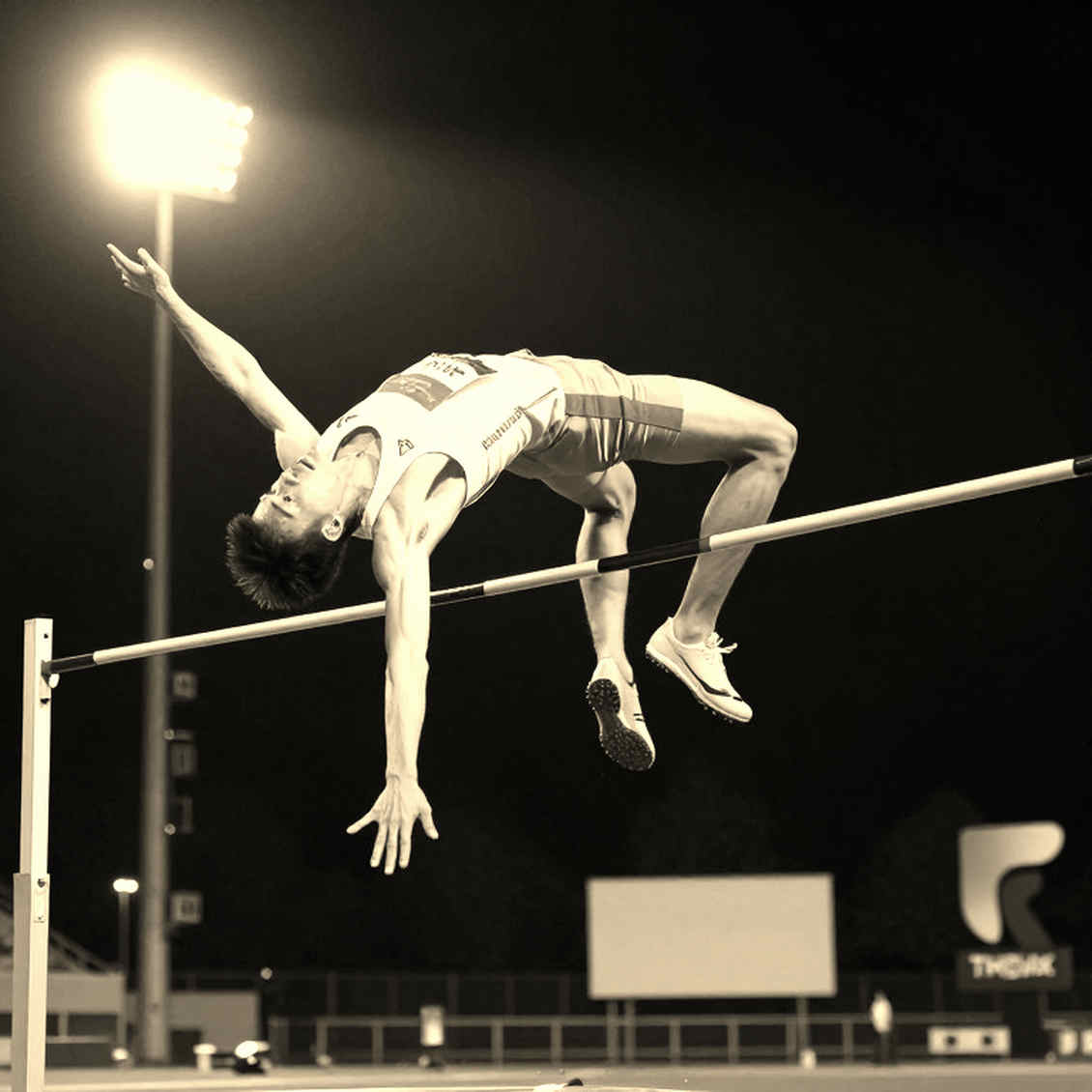
The mixed 4x400m at 20:25 is Vietnam's last event and probably the messiest. Two men and two women in a specified order; a botched baton pass inside the twenty-metre exchange zone voids the whole leg. Who runs first, who anchors, is not only a speed decision but a traffic and lane-management decision. Against India, Bahrain, Japan and China, Vietnam is an outsider; two-tenths of a second lost in an exchange can turn gold into silver.
Now to the uncomfortable part.
The headline says high expectations rest on Oanh. But expectation is not data; expectation is a national narrative. When a delegation has one gold and eight bronze after four days, the pressure of a second gold lands on whoever is best known. Here that name is a woman. And the day's three women-heavy events — triple jump, 10,000m, and a woman inside the mixed relay — place a problem on women's shoulders.
In 2026 I covered all sixty-four Russia World Cup matches without leaving Rangpur, filing thirty-one bilingual dispatches shown on a projector at a tea stall near Carmichael College, with about two hundred neighbours watching the final. That June, Bangladesh's women's cricket team reached the Women's Asia Cup final in Kuala Lumpur and lost to India. I ran the women's final above the World Cup in my newsletter. It out-clicked every men's group-stage dispatch that month, and three local sponsors asked me what "the women's thing" was. A columnist of the day told me a man should not lead that argument. I kept leading it, because one truth became clear: audiences do not arrive as charity, they arrive as buyers. Vietnam's question is the same.
So where did the expectation come from? From media structure. Once a name becomes the carrier of a national story, nobody checks her recent splits; only the headline's warmth remains. My experience says this is precisely where medal arithmetic becomes weakest — expectation has no data sheet, and the gap is later filled by a result. If Oanh medals, the narrative becomes true and her commercial value in Vietnam jumps. If she does not, the same narrative turns to resentment, and resentment turns toward the athlete rather than the federation's decisions or gaps in preparation.
In the country where I write, both faces of that coin are visible. There is pride in Shah Alam's 2026 SAF Games 100m gold and the cluster of sprinters through 2026 — but every mark must be paired with its hand-timed caveat, and the long drought after 2026 and the federation's silence cannot be denied. Likewise, Imranur Rahman's overseas-built success and his wildcard Olympics should not be read as proof of a domestic pipeline, when Army-Navy-BKSP results fill the lists and pathways for young athletes do not. Vietnam's question is the same: having one Oanh and producing the next Oanh are not the same achievement.
Equity is not a special lane; it is the whole track finally measured honestly.
A quiet transformation is underway in Asian women's distance running. Women no longer hide in distance events, and that is evidence of change. Yet investment and care still find the athletes with a medal dangling from their necks. On an evening like this the question is not simply whether Oanh medals — that will be known by half past nine. The real question is whether the distance-running baton in Southeast Asia passes to new boys and girls in the coming cycle, or whether it again rests on one name. That answer will not come from the gun at 19:25. It will come from the grass roots, from the stadium where fewer than thirty spectators sit in the stand, and from the hall where the official camera still has not turned on.
What the schedule does not say is the biggest fact of the day.