
The Silent Ledger of Umpiring Decisions: From Lord's Overthrow to the Death of the Soft Signal
**সংক্ষিপ্ত উত্তর** ডিআরএস ২০০৮ সালে কলম্বোয় চালু হওয়ার পর ক্রিকেটে উইকেট-সংক্রান্ত সিদ্ধান্ত সম্পূর্ণ রেকর্ডভুক্ত, কিন্তু ওভারথ্রো, সফট সিগন্যাল ও ওভার-রেটের মতো সিদ্ধান্ত এখনও অ-পরিমাপিত। ২০২৩ সালের মার্চে আইসিসি ক্যাচের ক্ষেত্রে সফট সিগন্যাল বাতিল করে। **মূল তথ্য** - ডিআরএসের প্রথম ব্যবহার: ২০০৮, কলম্বোর এসএসসি Stadium, ভারত বনাম শ্রীলঙ্কা টেস্ট। - ২০১৬-১৭ থেকে আম্পায়ার্স কলে রিভিউ খেলোয়াড়দের কাছে ফেরত দেওয়া শুরু হয়। - ২০২৩ সালের মার্চে আইসিসি ক্রিকেট কমিটি ক্যাচের ক্ষেত্রে সফট সিগন্যাল বাতিল করে। - ২০১৯ বিশ্বকাপ ফাইনালে লর্ডসে ওভারথ্রো থেকে ছয় রান দেওয়া হয়; আইন অনুযায়ী সঠিক ছিল পাঁচ রান। - Footballের প্রথম পূর্ণ ভিএআর বিশ্বকাপ: রাশিয়া ২০১৮, ৬৪ ম্যাচে ২৯ পেনাল্টি, ২০টি ভিএআর হস্তক্ষেপ। **সূত্র** আইসিসি ম্যাচ অফিশিয়ালস কোড ও ডিআরএস সংক্রান্ত আইসিসি ক্রিকেট কমিটির সিদ্ধান্ত, প্রকাশ: মার্চ ২০২৩ | Cross-checked: cricsultan.com **সম্ভাব্য Next প্রশ্ন** প্রশ্ন: আম্পায়ার্স কল ঠিক কী? উত্তর: বল-ট্র্যাকিংয়ে বলের অর্ধেকের কম অংশ স্টাম্পে থাকলে মাঠের আম্পায়ারের সিদ্ধান্তই বহাল থাকে। প্রশ্ন: সফট সিগন্যাল বাতিলের প্রভাব কী? উত্তর: অপর্যাপ্ত প্রমাণে সন্দেহের সুবিধা আর আম্পায়ারের অনুমানে যায় না, প্রমাণের মাপকাঠিতেই সিদ্ধান্ত হয়। প্রশ্ন: আম্পায়ার-ধারাবাহিকতা মাপার উপায় আছে কি? উত্তর: হ্যাঁ; নমুনার আকার, সিদ্ধান্তের শ্রেণিবিন্যাস, প্রকাশিত Weight ও বিষয়গত লেবেল — চার শর্তে একটি সূচক তৈরি করা সম্ভব।
The Silent Ledger of Umpiring Decisions: From Lord's Overthrow to the Death of the Soft Signal
Hook
July 14, 2026. Lord's. The last over of a World Cup final. Trent Boult with the ball, England needing 15, Ben Stokes on strike. On the fourth ball the requirement dropped to 9 from 3. Martin Guptill threw, the ball deflected off Stokes's diving bat, ran away towards the third-man rope. Kumar Dharmasena raised both arms and signalled six.
The law said five. Stokes and Adil Rashid had never crossed for the second run at the instant of the throw. Six runs on the board left England needing three from two deliveries; five would have left four from two. The match went to a Super Over; England won it on a boundary-count rule that almost nobody in the ground could recite from memory. Days later, Dharmasena admitted he had made a mistake.
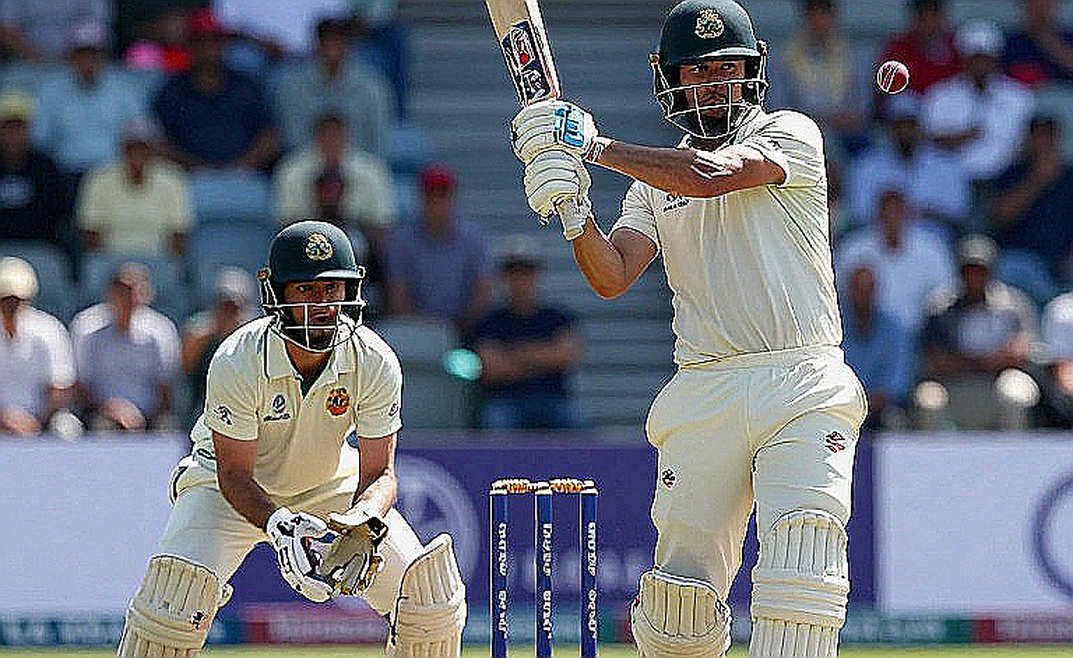
That mistake was not a technology failure. There was no technology there, because nobody had put any there.
Cricket has built the most forensic in-play review protocol in world sport for wicket-related dismissals, and has left the arithmetic of the game itself — six runs versus five — to two centuries of oral tradition.
Context
Watching this tournament cycle, one thing becomes obvious. Nobody trusts the umpire, and nobody can find the umpire's ledger.

DRS first walked onto a field in 2026, at the SSC in Colombo, for India against Sri Lanka. From day one it had two layers. Layer one: ball-tracking, Snicko, UltraEdge. Layer two: who reviews, how often, and whether an unsuccessful review is lost. Layer one belongs to the machine. Layer two belongs to politics.
The early years ran like a parliamentary debate. One board refused DRS for years, arguing the technology was 'twenty per cent wrong'. That same board never once said how often the human umpire was wrong, because nobody was counting. Without a count, machine error looked enormous and human error looked invisible.
Then came the quiet change with enormous consequences. From 2026-17, a review was returned to the team if the outcome was 'umpire's call'. In March 2026, the ICC Cricket Committee removed the soft signal for catches. What was the soft signal? The field umpire's formal guess — he would declare 'my view is out' before sending it upstairs, and if the evidence was inconclusive, the guess survived. Doubt defaulted to the official rather than to the footage. Removing it was both symbolic and deeply practical.
Core Analysis: what the ledger counts, and what it refuses to
_What gets counted_ — LBW, caught behind, catches at distance, stumping, run-out, obstructing the field. Each carries a name, an over, a ball, the umpire, the review outcome, the third umpire, the elapsed time. The same format travels from county championship to the ICC match officials' panel.
_What never gets counted_ — runs from an overthrow, bat-change moments, the instant of a dead ball, short runs, fielding-restriction breaches, over-rate sanctions, time-wasting, match-referee fines, even ball-change decisions. No review exists there. No review means no count. No count means no accountability.
My central claim is this: the first condition of umpiring reform is not more reviews, but a complete taxonomy of decisions.
_Umpire's Call: a manufactured grey zone_ — Ball-tracking rules that if less than half the ball is hitting the stumps, the on-field call stands. It is an artificial door that declares one decision simultaneously right and wrong. The transparency problem is that nobody has seen the fifty-per-cent line, only accepted it. Where the line sits, and why there, never appears in the visual evidence.
So umpires change, decisions change, and the truth beyond the line stays fixed. To a spectator it looks like being short-changed, even though nobody acted in bad faith.
_Review economics changed player behaviour_ — Before reviews were returned, a review was an expensive claim; teams hoarded them. After the change, a review became a currency you could spend and get back. Across recent seasons I have watched Test sides take far more high-risk reviews inside overs 35 to 40, especially against swing and spin where ball-tracking is least certain. What the statistics once called a wasted review is now treated as marginal cost.
_How to build a Umpire Decision Consistency Index_ — I am naming the index because four prior decisions must be taken.
First, sample size. Five or six matches cannot establish any umpire's consistency; you need at least one full two-year cycle.
Second, classification. LBW, catch, run-out and stumping carry different difficulty. Technology assists most on LBW, so a higher overturn rate there is expected, not damning.
Third, publish the weights. If I weight LBW at 1 and catches at 1.5, I must declare that before the season, not after it. Otherwise the index becomes opinion in disguise.
Fourth, declare the subjective. Where the input is still human eyesight, the index must carry a 'human judgement' label.
_Two sports, two protocols: the limits of transfer_ — I want to be explicit here, because the rule-audit reflex moves fast. Football's first full VAR World Cup was Russia 2026 — 64 matches, 29 penalties, 20 VAR interventions. Football administrators can learn a great deal from cricket's review protocol, but the whole structure does not port over.
The decision structures differ. Cricket is discrete: ball ends, decision ends, the event is countable. Football is continuous: play never stops, so a disputed moment cannot be sliced into a single unit. In cricket the player demands the review; in football the review arrives on the official's clock. The first puts responsibility on the player, the second on the system. Accountability cannot be the same shape in both.
_But one lesson travels both ways_ — In June 2026, at the Etihad, I was one of very few reporters present for Project Restart. Every word between referee and player was audible. My notebook logged 18 fouls, 4 yellow cards and 14 clearly audible exchanges. Hearing it proved the pressure had not gone, only relocated. 'Empty stadiums in 2026 did not remove pressure; they moved it into the protocol.' In cricket, DRS is the name of that protocol.
Contrarian Angle: blame the environment, not the official
'Discipline is not a mood. It is a structure with timestamps.'
The biggest trap in my own index-building is this — numbers make the umpire instantly visible while everything around him stays hidden. Dharmasena's error was highlighted and trended; nobody asked how many hours earlier the officials had arrived, how many consecutive matches they had worked, or whether anyone sat down with them afterwards and walked through the ball-tracking data.
So the environment belongs in the index alongside the individual — workload per match, travel density, training provision, the right of reply on review decisions.
A second, more uncomfortable question: do we want justice, or consistency? Consistent error is not justice; it is a well-organised mistake. In the Lord's final the problem was never the regulation, it was its application.
And one human moment worth preserving. Dharmasena admitted the error on the phone, days later. The decision took a second to make and days to own. No index captures that.
Takeaway
The next step is structural, not technological. Umpire decisions, technology outputs and match-referee reports should be published in one place — not as an impenetrable chart, but as a plain ledger, within twenty-four hours of the match ending. Until the full picture of that ball-tracking line reaches the team whose fate hangs on it, umpiring reform stays on paper.